JavaScript Notes
Learn to build a live digital clock in JavaScript using Date object, setInterval, 12/24-hour toggle, AM/PM display, and smooth CSS styling.
What You'll Learn
- How to use the JavaScript
Dateobject to read the current time - How to use
setIntervalto update the clock every second - How to zero-pad numbers with
String.padStart(2, '0') - How to toggle between 12-hour and 24-hour formats
- How to display the day name and full date alongside the time
Project Overview
A digital clock reads the system time once per second and updates the DOM. The key insight is that the JavaScript Date object gives you the current moment every time you call new Date(), and setInterval calls your update function repeatedly.
Component Structure
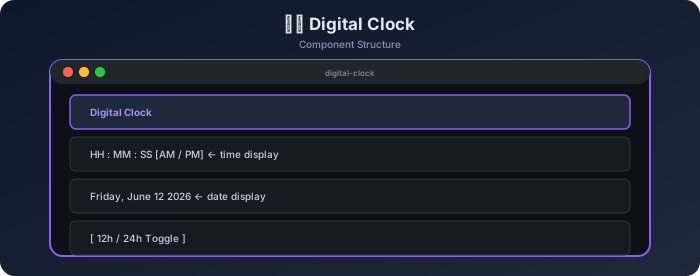
How It Works — Flow Diagram
Step-by-Step Build
Step 1 — HTML Structure
<div class="clock-wrapper">
  <div class="clock">
    <div class="time-display">
      <span id="hours">00</span>
      <span class="colon">:</span>
      <span id="minutes">00</span>
      <span class="colon">:</span>
      <span id="seconds">00</span>
      <span id="ampm" class="ampm"></span>
    </div>
    <div id="dateDisplay" class="date-display"></div>
    <button id="toggleFormat" class="toggle-btn">Switch to 12h</button>
  </div>
</div>
Step 2 — State
let is24Hour = true;

const hoursEl   = document.getElementById("hours");
const minutesEl = document.getElementById("minutes");
const secondsEl = document.getElementById("seconds");
const ampmEl    = document.getElementById("ampm");
const dateEl    = document.getElementById("dateDisplay");
const toggleBtn = document.getElementById("toggleFormat");
Step 3 — Core Update Function
Step 4 — Date Display
Step 5 — 12h / 24h Toggle
Step 6 — Start the Clock
updateClock();              // run immediately to avoid 1-second blank screen
setInterval(updateClock, 1000);
Console Output
// At exactly 09:05:03 in 12h mode
hours   = 9  → padStart → "09"
minutes = 5  → padStart → "05"
seconds = 3  → padStart → "03"
ampm = "AM"
DOM: "09:05:03 AM"

// At exactly 14:30:00 in 24h mode
hours   = 14 → padStart → "14"
minutes = 30 → padStart → "30"
seconds = 0  → padStart → "00"
DOM: "14:30:00"
Final Output — What It Looks Like
Edge Cases to Handle
| Situation | Expected Behavior | ||
|---|---|---|---|
| Midnight in 12h mode | `0 % 12 \ | \ | 12 = 12` → shows "12:00:00 AM" |
| Noon in 12h mode | Shows "12:00:00 PM" (not 0) | ||
| Single-digit seconds | padStart(2, "0") → "09" | ||
| Tab in background | setInterval may throttle — clock catches up when visible | ||
| New year rollover | new Date() always reflects system time |
Challenge Yourself
- Timezone selector — let users pick a timezone via
Intl.DateTimeFormat - Alarm — add a time picker and play a sound when the clock reaches that time
- Blinking colon — toggle the
:separator's visibility every 500ms - CSS flip animation — animate each digit flipping like a physical clock
- World clocks — show 3 clocks for different cities simultaneously
Best Practices
- Call
updateClock()once beforesetIntervalto show the time immediately - Always use
padStart(2, "0")— never rely on the hour/minute/second being two digits - Use
constfor DOM references — they don't need to change - Keep
updateClock()side-effect free except for DOM updates - Use
Intl.DateTimeFormatfor locale-aware date/time formatting in production
Exam Focus
Revise definitions, diagrams, examples, and short-answer points for Build a JavaScript Digital Clock - Step by Step Project Tutorial.
Interview Use
Prepare one clear explanation, one practical example, and one common mistake for this JavaScript Master Course topic.
Search Terms
javascript-complete-guide, javascript master course, javascript, complete, guide, mini, projects, digital
Related JavaScript Master Course Topics