JavaScript Notes
Learn to build an auto-playing image carousel in JavaScript with prev/next buttons, dot indicators, touch swipe support, and smooth CSS transitions.
What You'll Learn
- How to manage a current slide index with wrap-around logic
- How to build prev / next navigation buttons
- How to create dot indicators that reflect the active slide
- How to add auto-play with
setIntervaland pause on hover - How to detect touch/swipe gestures for mobile
Project Overview
An image carousel cycles through a set of slides. Only one slide is visible at a time. Users can move forward or backward manually, or watch it advance automatically.
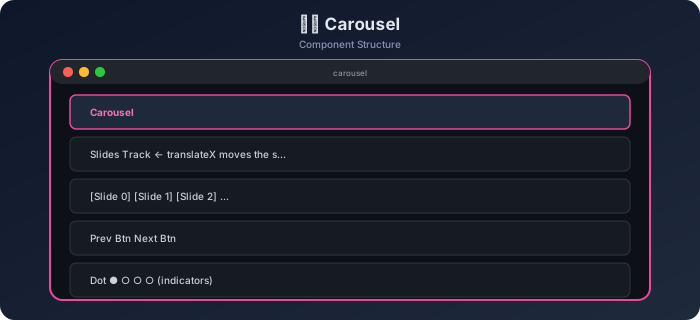
Component Structure
How It Works — Flow Diagram
Step-by-Step Build
Step 1 — HTML Skeleton
<div class="carousel" id="carousel">
<div class="carousel__track-wrapper">
<div class="carousel__track" id="track"></div>
</div>
<button class="carousel__btn carousel__btn--prev" id="prevBtn">‹</button>
<button class="carousel__btn carousel__btn--next" id="nextBtn">›</button>
<div class="carousel__dots" id="dots"></div>
</div>Step 2 — State & Slide Data
Step 3 — Build Slides Dynamically
Step 4 — Build Dot Indicators
Step 5 — GoTo Function (Core Logic)
Step 6 — Prev / Next Buttons
Step 7 — Auto-Play with Pause on Hover
Step 8 — Touch / Swipe Support
Step 9 — Initialize
buildSlides();
buildDots();
goTo(0);
startAutoPlay();
Console Output
buildSlides() → 4 <div.carousel__slide> elements appended to #track
buildDots()   → 4 <button.carousel__dot> elements appended to #dots
goTo(0)       → transform: translateX(0%)  | dot 0 active
--- 3s later ---
goTo(1)       → transform: translateX(-100%)  | dot 1 active
--- 3s later ---
goTo(2)       → transform: translateX(-200%)  | dot 2 active
--- User swipes left ---
goTo(3)       → transform: translateX(-300%)  | dot 3 active
--- User swipes left again ---
goTo(0)       → wrap-around! transform: translateX(0%)  | dot 0 active
Key CSS
.carousel__track-wrapper { overflow: hidden; }

.carousel__track {
  display: flex;
  transition: transform 0.4s ease;
}

.carousel__slide {
  min-width: 100%;   /* each slide fills the wrapper */
}
Edge Cases to Handle
| Situation | Expected Behavior |
|---|---|
| Index goes below 0 | Wrap to last slide using modulo |
| Index exceeds length | Wrap to first slide |
| Single image | Hide prev/next buttons |
| Rapid clicking | Auto-play resets cleanly |
| Keyboard arrow keys | ← → navigate slides |
Challenge Yourself
- Keyboard navigation — ArrowLeft / ArrowRight keys navigate slides
- Fade transition instead of slide (use
opacity+position: absolute) - Thumbnails strip — click a small thumbnail to jump to that slide
- Lazy loading — only load images as they become visible
- Caption overlay — show the
alttext as a caption at the bottom of each slide
Best Practices
- Use
((index % len) + len) % lenfor safe wrap-around with negative numbers - Apply event delegation where possible
- Use CSS
transitionon the track, not JavaScript animations - Add
aria-labelto navigation buttons for accessibility - Use
loading="lazy"on images beyond the first slide
Exam Focus
Revise definitions, diagrams, examples, and short-answer points for Build a JavaScript Image Carousel - Step by Step Project Tutorial.
Interview Use
Prepare one clear explanation, one practical example, and one common mistake for this JavaScript Master Course topic.
Search Terms
javascript-complete-guide, javascript master course, javascript, complete, guide, mini, projects, carousel
Related JavaScript Master Course Topics