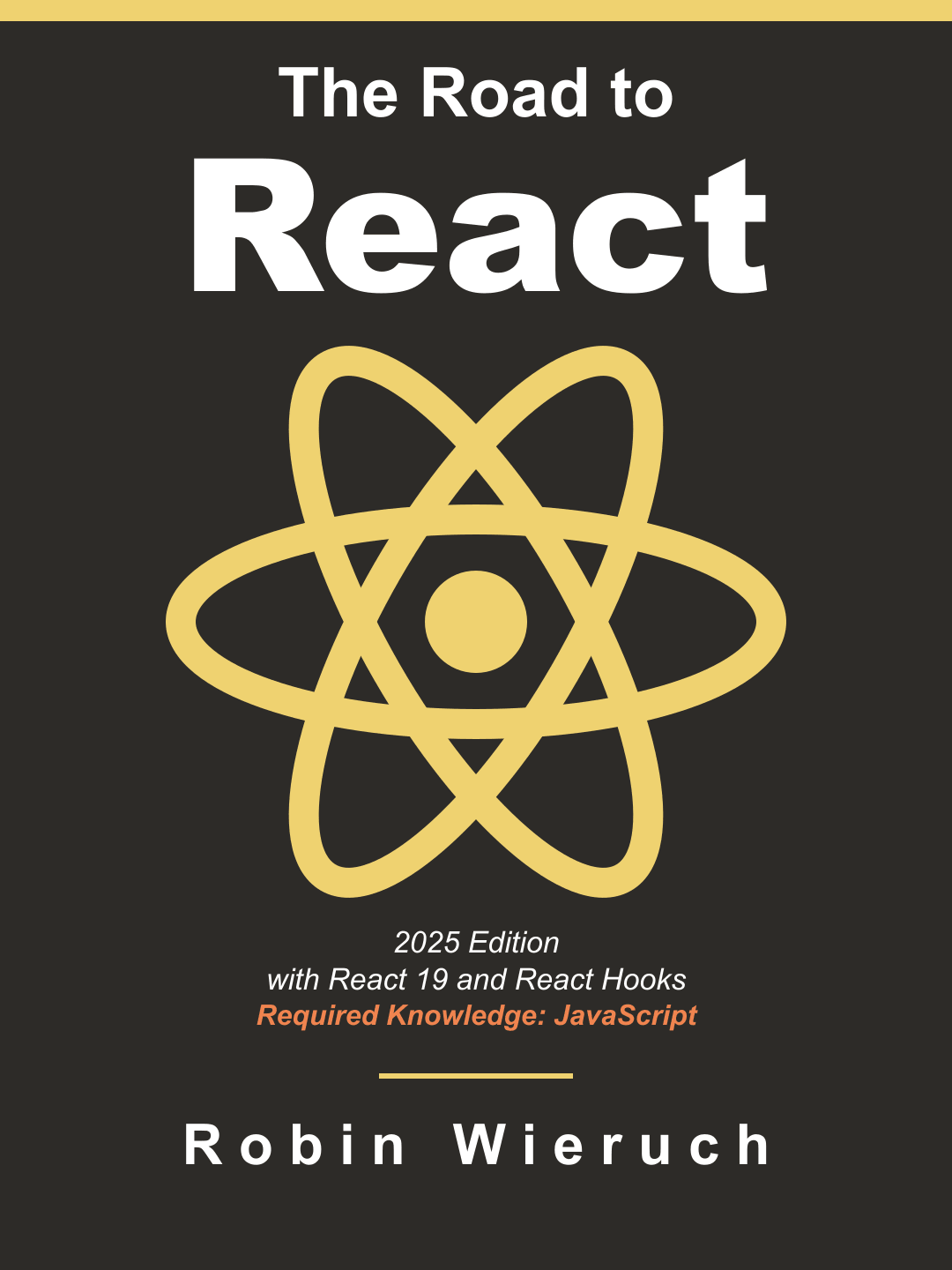
The Road to Learn React by Robin Wieruch: Why This Is the Best Book to Master React.js
A beginner-friendly review of The Road to Learn React by Robin Wieruch, covering its plain React first philosophy, project-based structure, updates, learning path, reader fit, and value.
Disclosure: This article contains affiliate links. If you buy through these links, WoHoTech may earn a small commission at no extra cost to you. The recommendation is based on educational fit, learning path, and reader usefulness.
Introduction: The Challenge of Learning React
Want to learn React but feel overwhelmed by where to start? The Road to Learn React by Robin Wieruch may be the right first guide.
In today's frontend development landscape, React.js has become one of the most popular JavaScript libraries for building user interfaces. But for beginners, the React ecosystem can feel noisy: Webpack, Babel, Redux, Hooks, TypeScript, Next.js, server components, testing, deployment, and more. The hardest part is often not learning React itself. It is knowing what to ignore first.
The strength of The Road to Learn React is that it gives learners a calm, step-by-step route through React fundamentals without forcing them into the entire ecosystem on day one.
Get The Road to Learn React on Amazon
Plain React First Philosophy
The book's core principle is simple: learn React concepts before diving into complex tooling.
That means beginners are not pushed straight into Redux, GraphQL, advanced build tools, or framework-specific patterns before they understand the basics. The early focus is on the ideas that make React click:
- Components
- Props
- State
- Hooks
- JSX
- Conditional rendering
- Lists
- User events
- API-driven interfaces
The result is a cleaner learning curve. Instead of memorizing a stack of tools, the learner first understands how React thinks.
Project-Based Learning
One reason this book stands out is its practical structure. The concepts are tied to a real application, so theory does not stay abstract for long.
Across the learning path, readers work with hands-on exercises, reusable code snippets, and a complete application that introduces features a real frontend developer needs:
- Search
- Filtering
- Pagination
- API integration
- Loading states
- Error handling
- Reusable components
- Custom hooks
This is especially helpful for developers stuck in tutorial loops. A single growing project helps connect the dots between chapters.
Continuously Updated Content
React changes fast, and old learning resources can become confusing when examples no longer match modern React patterns. The Road to Learn React has stayed useful because the author keeps improving it over time.
The book has been updated since its earlier releases to reflect modern React practices such as hooks and more current application patterns. That matters because React learning should build habits that still feel natural in modern projects.
Beginner-Friendly Yet Useful for Growth
The book is approachable for beginners, but it is not just a shallow introduction. It starts simple and then gradually moves toward topics that help learners grow beyond the basics.
| Feature | Benefit |
|---|---|
| Clear, simple language | Complex concepts become easier to approach |
| JavaScript alongside React | Learners strengthen the language skills React depends on |
| Progressive difficulty | The path starts with basics and moves toward hooks, context, testing, and TypeScript |
| Real-world patterns | Readers learn sorting, caching, error handling, and loading states |
This makes it useful for absolute beginners, career switchers, interview preparation, and self-paced learners who want structure.
Robin Wieruch is known in the React community for practical, clear programming education. His teaching style is direct and example-driven, which fits React especially well because the library rewards learning by building.
The book reflects that style: concise explanations, focused examples, and a preference for understanding the "why" behind a pattern instead of only copying code.
Value and Bonus Resources
The book is commonly available in formats such as paperback, Kindle, PDF, and EPUB. A major advantage is that the learning experience does not stop with the printed page.
Readers can also benefit from:
- Updated online material
- GitHub code examples
- Chapter references and additional reading
- A broader ecosystem of Robin Wieruch tutorials
For learners who want one structured React path instead of dozens of disconnected tutorials, that makes the book a strong value.
Check The Road to Learn React on Amazon
Active Community and Ongoing Support
Another benefit is the ecosystem around the book. Public code, issue discussions, reader questions, and related tutorials give learners more places to clarify doubts.
That support matters because React beginners often get stuck on small implementation details: a state update, an effect dependency, a prop flow, or an API response shape. Having code and discussion around the material makes the learning process less lonely.
What's Inside? Book Structure Overview
Part 1: React Fundamentals
- Setting up your first React app
- JSX, components, and props
- State management with
useState - Side effects with
useEffect - Custom hooks and reusable logic
- Conditional rendering and lists
Part 2: Building Real-World Features
- Client-side and server-side search
- Pagination and infinite scrolling
- Local storage and caching strategies
- Error boundaries and loading states
- Forms, validation, and user input
Part 3: Advanced Topics and Deployment
- Context API versus external state management
- TypeScript integration for type safety
- Testing with Jest and React Testing Library
- Performance optimization techniques
- Deployment to services such as Firebase, Netlify, or Vercel
Who Is This Book Perfect For?
This book is a strong fit for:
- Absolute beginners who already know basic JavaScript
- Career switchers moving into frontend development
- Students preparing for React interviews
- Self-paced learners who prefer a structured path
- Developers stuck in tutorial hell who need one complete project
It is not ideal for developers who only want copy-paste solutions without understanding the concepts. It is also not the first choice if your only goal is advanced SSR, Next.js architecture, or micro-frontends.
Final Verdict: Should You Buy This Book?
| Criteria | Rating |
|---|---|
| Clarity of explanations | 5/5 |
| Practical examples | 5/5 |
| Content freshness | 5/5 |
| Value for money | 5/5 |
| Beginner accessibility | 5/5 |
| Depth for intermediate learners | 4/5 |
If you are serious about learning React, The Road to Learn React is a smart first book to add to your shelf. It teaches React fundamentals in a way that feels practical, steady, and confidence-building.
It will not just show you React syntax. It will help you start thinking like a React developer.
Related posts
View all WebChatGPT Update: Why Product Teams Still Need Better UX Around AI
A ChatGPT update can improve capability, but product success still depends on layout, trust, navigation, and clear user guidance.
ProgrammingApple MacBook Pro M5 Review (2026): Complete In-Depth Review, Performance, Battery, AI Features & Real-World Experience
Detailed Apple MacBook Pro M5 review covering design, performance, gaming, battery life, AI features, display quality, software experience, creator workflow, and comparison with competitors.
ToolsPercentage Kaise Nikale? Percentage Calculator Ka Sahi Upyog Aur Formulas
Percentage kaise nikale, percentage calculator ka sahi use kaise kare, marks percentage, discount, profit-loss aur percentage change ke formulas simple Hindi me samjhein.
Next article
Apple MacBook Pro M5 Review (2026): Complete In-Depth Review, Performance, Battery, AI Features & Real-World Experience
Detailed Apple MacBook Pro M5 review covering design, performance, gaming, battery life, AI features, display quality, software experience, creator workflow, and comparison with competitors.