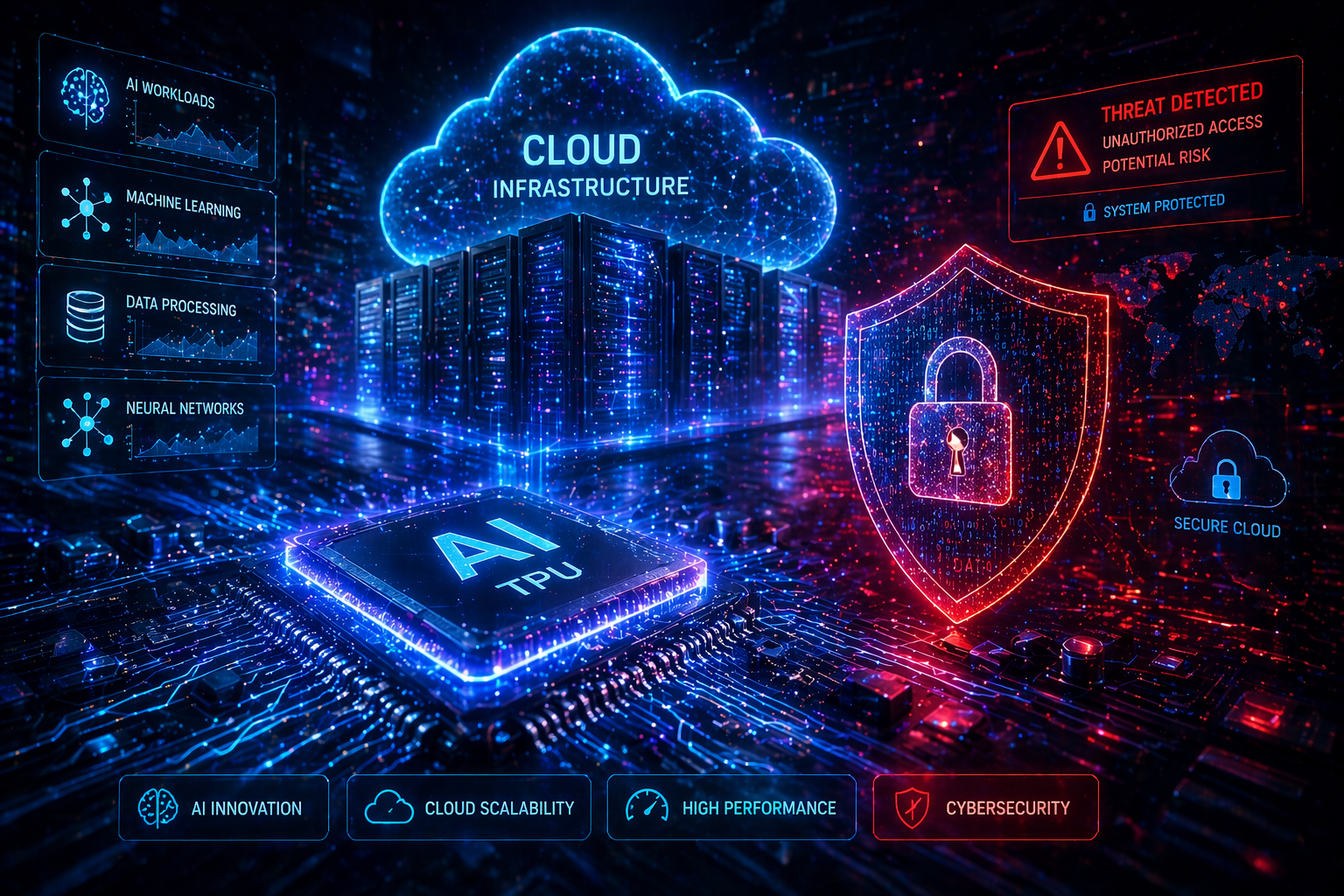
Google Cloud, AI Chips, and Cybersecurity Concerns: What Alphabet's Latest Moves Mean
Alphabet is pushing harder into AI cloud infrastructure with new TPUs, bigger enterprise partnerships, and a sharper focus on security as cyber risks around advanced AI systems rise.
Introduction
Alphabet entered the week of Google Cloud Next '26 with a clear message: the future of enterprise AI will be won by companies that control the full stack.
That means custom chips, tightly integrated cloud infrastructure, stronger enterprise partnerships, and better governance around how advanced AI systems are deployed. It also means the risks are getting bigger. As AI systems become more capable in code generation, reasoning, and cyber defense, the question is no longer only who has the fastest infrastructure. It is also who can secure it.
This is why the latest Google Cloud story matters. On one side, Google is expanding its technical edge with specialized TPUs and a vertically integrated AI platform. On the other, the broader market is being reminded that advanced models can become cybersecurity liabilities if access controls and operational safeguards are weak.
Alphabet Cloud Division's New Processing Units
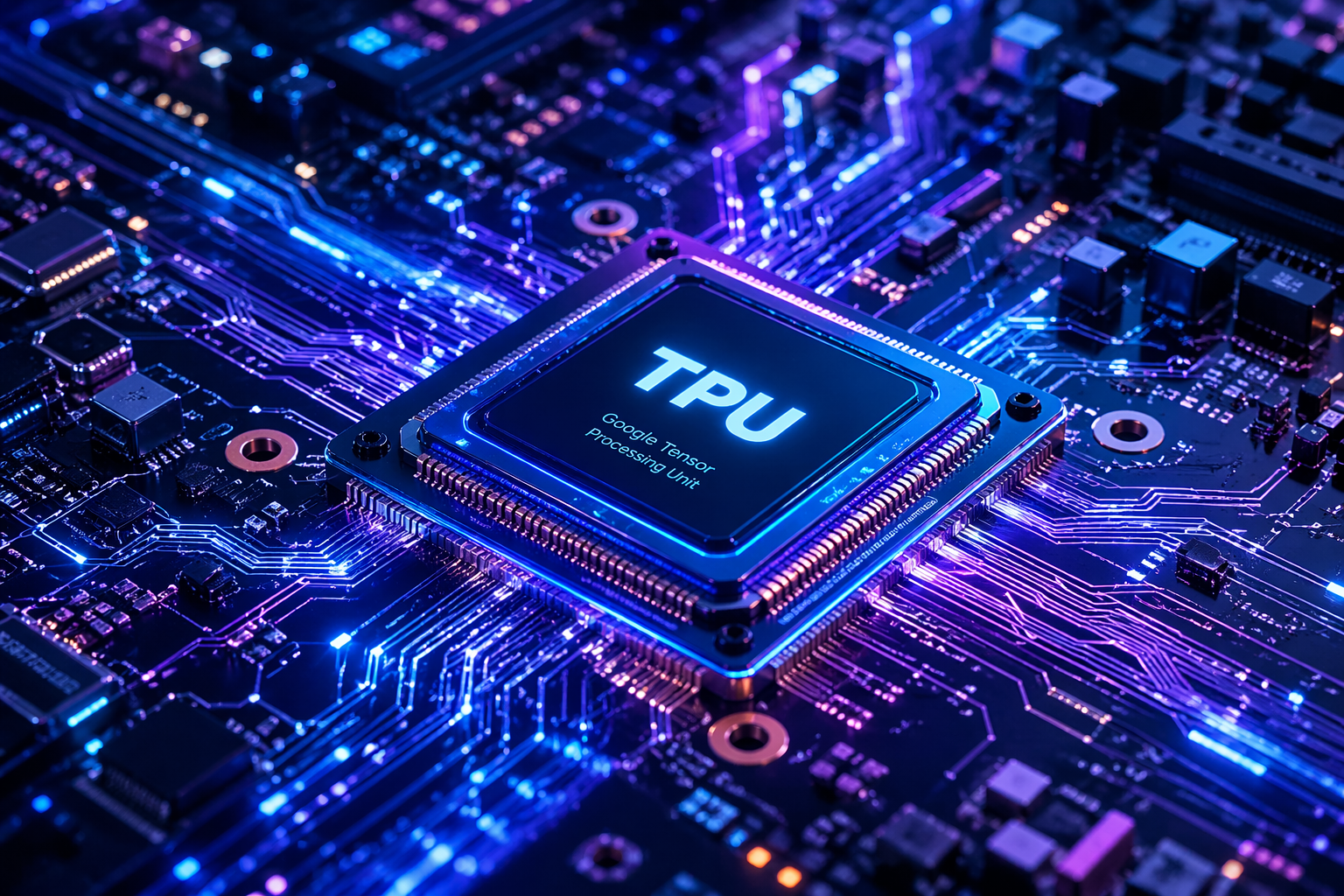
At Cloud Next '26, Google introduced its eighth-generation TPU lineup with a dual-chip strategy built for the agentic AI era.
The split is important:
TPU 8iis designed for inference, where speed and responsiveness matter most for live AI applications.TPU 8tis optimized for training, where large models need massive memory and scale.
This matters because enterprise AI workloads are no longer uniform. A company training a frontier model has very different infrastructure needs from one serving millions of agent responses in production. By splitting the TPU roadmap into training and inference roles, Google is signaling that AI infrastructure has become specialized, not generic.
That specialization also strengthens Google's long-standing vertical integration advantage. It designs the chips, runs the cloud platform, builds the models, and now increasingly provides the agent platform on top. For enterprise customers, that can translate into better performance tuning, tighter cost control, and faster deployment compared with stitching together vendors across multiple layers.
Google also used the event to underline its operating scale. As of April 22, 2026, the company said nearly 75% of Google Cloud customers were already using its AI products, with 330 customers processing more than one trillion tokens each over the prior 12 months. That kind of usage makes infrastructure efficiency more than a technical bragging point. It becomes a business weapon.

Strategic Partnerships and Market Expansion
Google's chip strategy is only one part of the story. The second part is ecosystem expansion.
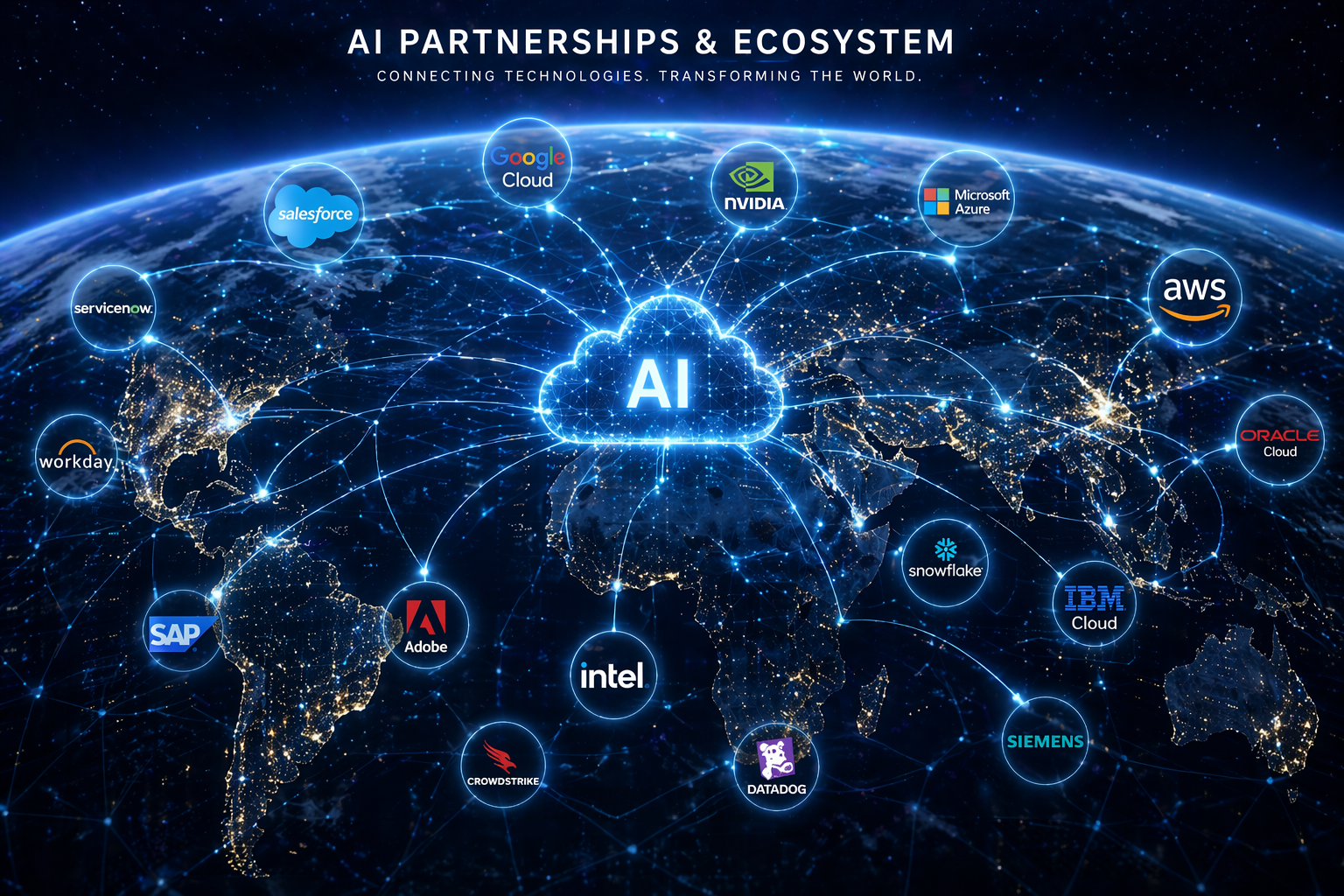
At Cloud Next '26, Google framed its broader push around the Gemini Enterprise Agent Platform, the AI Hypercomputer stack, and a larger partner network that helps customers move from experimentation to deployment. That is where the company is trying to differentiate itself from cloud rivals. Instead of selling only compute, it is packaging infrastructure, models, orchestration, and enterprise workflows together.
One of the more notable announcements came on April 22, 2026, when Vista Equity Partners said it was partnering with Google Cloud to bring Google's AI stack and engineering resources into Vista's portfolio of software companies. That is strategically important because it gives Google a channel into dozens of enterprise software businesses at once, not just one customer at a time.
Google's ecosystem story also extends through security and infrastructure partners. NVIDIA remains an important part of the picture, even as Google promotes its own TPUs, because enterprise customers still want optionality across accelerator types. In security, Google and CrowdStrike were both highlighting deeper ties around cloud and AI defense during the same Cloud Next week, reinforcing the idea that AI growth and security spending are now moving together.
Why Vertical Integration Gives Google an Edge
The strongest signal in all of this is not any single product announcement. It is the shape of Google's strategy.
Google is increasingly presenting itself as a fully integrated AI cloud provider:
- custom TPUs for different workload types
- proprietary models and enterprise AI services
- a cloud platform already optimized for those workloads
- an expanding enterprise and partner ecosystem
That combination matters in a market where capacity, latency, and cost are becoming deciding factors. If a cloud vendor controls more of the stack, it can often optimize faster and negotiate from a stronger position.
This does not mean competitors are weak. AWS, Microsoft, and NVIDIA all remain deeply influential. But Google's latest moves show that it no longer wants to be seen as just another hyperscaler competing on features. It wants to be viewed as the platform purpose-built for production AI at enterprise scale.

Cybersecurity Concerns Around Advanced AI Models
The Bloomberg reporting around Anthropic's Mythos added a very different tone to the week's AI conversation.
Earlier in April 2026, Anthropic limited Mythos access through Project Glasswing, describing the model as powerful enough to help identify severe software vulnerabilities and potentially dangerous if released too broadly. That by itself was already a sign of how serious the cyber implications of frontier AI have become.
Then came the more uncomfortable part: reports that unauthorized users were able to access the restricted model through third-party pathways. Even if the incident did not become a major public exploit campaign, the message was hard to ignore. If a tightly controlled, high-risk AI system can be reached by outsiders, then every company building or hosting frontier AI needs to treat access control as a core product problem, not a compliance afterthought.
This is where Google's latest positioning becomes especially interesting. At the same event, Google was promoting more security-centric AI tooling and an Agentic Defense vision tied to Google security operations and Wiz. In other words, the same market that wants faster AI deployment is also demanding stronger security architecture around that deployment.
For the broader industry, the lesson is straightforward: advanced AI can improve cyber defense, but it can also compress the time between vulnerability discovery and misuse. That raises the value of secure infrastructure, trusted partnerships, and tight operational discipline.
Market and Business Implications
For Alphabet, these developments point in the same direction.
If Google can keep scaling enterprise AI demand while pairing it with its own custom silicon and platform services, cloud revenue quality improves. More workloads stay inside the Google ecosystem, and more value is captured across the stack rather than at a single layer.
The Vista deal supports that thesis. The TPU roadmap supports it too. Even the security angle supports it, because enterprise buyers are more likely to consolidate around platforms they trust to handle both performance and protection.
That does not remove execution risk. Google still has to prove that its platform can keep winning real production workloads against aggressive competition from AWS, Microsoft, and NVIDIA-linked ecosystems. But the strategic direction is now very clear.
Conclusion
Alphabet's latest cloud moves show a company trying to turn AI momentum into durable infrastructure advantage.
The new TPU strategy strengthens Google's case in both training and inference. The expanding partner ecosystem gives it better access to enterprise distribution. And the growing cybersecurity debate around advanced AI models makes secure, vertically integrated platforms more valuable than ever.
The opportunity is huge, but so is the responsibility. In the next phase of AI cloud competition, raw model power will matter. The bigger differentiator may be which companies can pair that power with scale, reliability, and security.
FAQ
Why are Google's new TPUs important?
They show Google is optimizing AI infrastructure for two different jobs: training large models and serving AI responses at production speed.
What makes Google's AI cloud strategy different?
Google is combining custom chips, cloud infrastructure, AI models, and enterprise agent tooling into one integrated stack instead of depending on a single layer.
Why does the Anthropic incident matter in this discussion?
Because it highlights how advanced AI capability can become a security risk if restricted systems are not protected with strong operational controls.
Related posts
View all AIGPT-5.5 AI Model Explained (Features, Use Cases & Comparison)
Explore the latest GPT-5.5 AI model, OpenAI new AI model updates, and GPT-5.5 features explained with coding, use cases, and comparison insights.
WebThe Road to Learn React by Robin Wieruch: Why This Is the Best Book to Master React.js
A beginner-friendly review of The Road to Learn React by Robin Wieruch, covering its plain React first philosophy, project-based structure, updates, learning path, reader fit, and value.
ProgrammingApple MacBook Pro M5 Review (2026): Complete In-Depth Review, Performance, Battery, AI Features & Real-World Experience
Detailed Apple MacBook Pro M5 review covering design, performance, gaming, battery life, AI features, display quality, software experience, creator workflow, and comparison with competitors.
Next article
AI Tools for Developers 2026: What Engineers Actually Use
Discover the AI tools developers actually use in 2026 across coding workflows, internal search, docs automation, model routing, and cost tracking.